

Fishery news
12
THG11
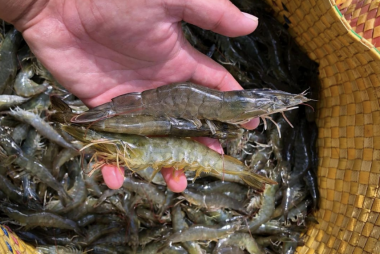
Applying technical innovations to develop sustainable brackish-water shrimp farming in the Mekong Delta
Vietnam’s shrimp industry plays a strategic role, contributing up to 45% of the country’s seafood export value and providing livelihoods for millions of households. However, climate change, stricter quality and traceability requirements, and increasing global competition are posing major challenges. The development goal is no longer to increase volume but to enhance value, sustainability, and environmental responsibility.
12
THG11
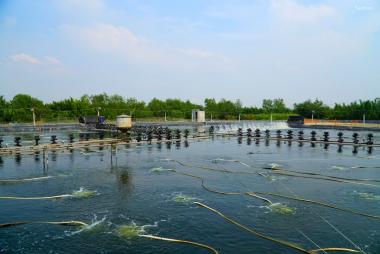
Ca Mau expands the RAS-IMTA shrimp farming model to 1,500 hectares
The People’s Committee of Ca Mau Province has issued a plan to scale up the intensive super-high-density, low-water-exchange, biosecure whiteleg shrimp farming model (RAS-IMTA) to 1,500 hectares, aiming to promote high-tech shrimp farming that is sustainable and environmentally friendly.
06
THG03
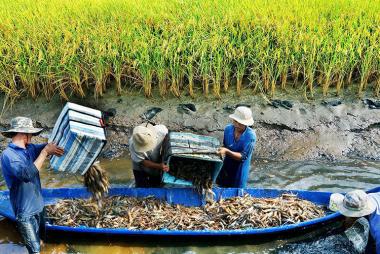
Shrimp-rice model: Is it a sustainable development solution?
Although there are ecological conflicts between shrimp and rice, for now, in conditions where the irrigation system is not yet fully developed, the shrimp–rice model is a temporary solution that can bring benefits to farmers.
24
THG11
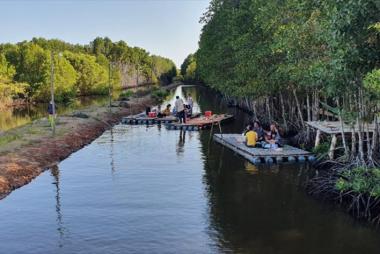
Shrimp–mangrove farming model: A sustainable solution for climate resilience
The shrimp–mangrove farming model, in which shrimp are farmed under mangrove forest canopies, has been expanding strongly across coastal provinces in the Mekong Delta such as Ca Mau, Bac Lieu, An Giang, Can Tho, and Vinh Long. This is a sustainable aquaculture approach that not only protects mangrove forests, but also supports climate change adaptation and provides stable livelihoods for local communities.
29
THG10
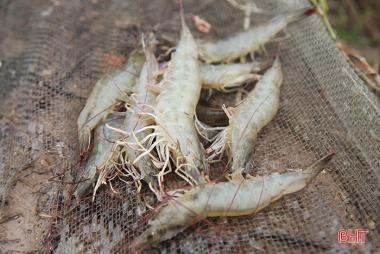
Prevention of White Feces Syndrome, White Gut Disease and White Muscle Disease in Shrimp
Shrimp culture tends to now be developed intensively with upgraded technology for higher and successful production.In many occasions shrimp culture are affected by various diseases and experienced in loss of crop or reduced the production level by various reasons, writes Mr Prakash Chandra Behera, India.
29
THG10
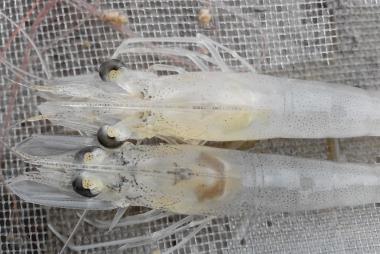
Disease caused by DIV1 in shrimp
DIV1 (Decapod iridescent virus 1) can cause mass death in shrimp with a high rate of infection. The disease results in quick lethality within just two to three days from the first infection until all shrimp in the pond die. DIV1 can infect small and large shrimp as well as white leg shrimp and giant freshwater prawn.
- 1
- 2
VIBO CO.,LTD
- Address: Lot No. 20, Zone G, D1 Street, An Ha Industrial Park, Tan Vinh Loc Commune, Ho Chi Minh City
- Phone: (84-28) 668.36156 / 668.36158
- Hotline: 1800.9435
- Fax: (84-28) 3620.4694
- Email: vibo@vibo.com.vn
- Website https://vibo.com.vn/