- Address: 胡志明市新榮祿社安夏工业园 D1 路 G 区 20 号地块
- Phone: (84-28) 668.36156 / 668.36158
- Hotline: 1800.9435
- Fax: (84-28) 3620.4694
- Email: vibo@vibo.com.vn
- Website https://vibo.com.vn/


Shrimp culture tends to now be developed intensively with upgraded technology for a higher and successful production. On many occasions, shrimp culture is affected by various diseases and experienced in the loss of crop or reduced the production level for various reasons, writes Mr. Prakash Chandra Behera, India.
Intensive and semi-intensive aqua farming accompanies several disease problems often due to opportunistic pathogens as evident from general aquaculture. High stocking densities, high food inputs, and other organic loads stimulate the selection and proliferation of opportunistic pathogens like bacteria, virus, fungi, protozoa, etc.
Gut Track Diseases in Shrimps
Shrimp are actively “grazing” on the substrate present in the pond bottom and water column. Therefore, they highly expose to exchanges of microflora between the environment and the digestive system. This increases the risk for the proliferation of an unfavorable gut microflora or frequent destabilization of the microflora, which can affect the optimal functioning of the digestive system.
Furthermore, the digestive system of shrimp is the main entry port for protozoan, bacterial, and viral infections, which remain a major risk for the profitability of shrimp production. Presently these are the most important Gut track diseases in shrimps:
White Feces Syndrome (WFS)
Accompanying acute hepatopancreatic necrosis disease (AHPND) in cultivated shrimps has been an increasing prevalence of vermiform, gregarine-like bodies within the shrimp hepatopancreas (HP) and midgut. A high quantity of these bodies result in white fecal strings and a phenomenon called white feces syndrome (WFS).WFS appears in shrimps from approximately 2 months of culture onwards and caused by gregarines. The vermiform bodies formations are consisting of Aggregated Transformed Microvilli (ATM). The ATM has originated by sloughing from epithelial cells of the shrimp hepatopancreatic tubules. They accumulate at the HP-midgut junction before being discharged within feces via the midgut.
White fecal matter
When the occurrence of ATM is severe, it can lead to the formation of white fecal strings in shrimp. The high density stocked shrimp pond exhibit this phenomenon and it leads to floating fecal strings or sometimes accumulate in floating mats (i.e., white feces syndrome or WFS). However, ATM sometimes occurs together with shrimp hepatopancreatic diseases such as the AHPND, other types of vibriosis, and parasitemia with the microsporidian Enterocytozoon hepatopenaei.
The impact of white fecal matter has been found in L. vannamei & P.monodon culture shrimps and there is no possible association with Loose shell syndrome. The severity of the problem due to the occurrence of white fecal matter has been observed to be a serious problem during the culture shrimps. Interestingly, the problem has been observed with the L. vannamei ponds having a high count of blue-green algae.
Main Feature of White Gut / Feces Syndromes :

Field signs of white feces syndrome (WFS)
Gross signs of WFS in shrimp cultivation pond included white to somewhat yellow, floating fecal strings that sometimes collected in mats or could also be found on feeding trays. The midgut junction and midgut are distended and filled with white to yellow-golden contents. When the contents of the gut or fecal strings are examined, they consisted of masses of vermiform bodies that superficially resembled gregarines.
Severely affected ponds exhibit a reduction in shrimp survival by 20–30 percent when compared to normal ponds. There is also a decrease in feed consumption, growth rates, and reduces in average daily weight gain (ADG).

(WFS in Shrimp pond)
The presence of more the number of gregarines is higher the chances of lesions and infections in cultured shrimp. The number of gregarines grows in number and get the nourishment from the host leaving lesion for the infections to set in. The gregarines also interfere in the assimilation of nutrients by the villi and resulting in the poor growth of cultured shrimps.

Comparison of white gut and white fecal matter
The White gut and White fecal matter are the two different problems in shrimp culture ponds that can possibly lead to Loose shell syndrome. In general, the White gut is caused by the necrosis of epithelial mucosa and resembles hemocyte enteritis. And usually, the White fecal matter is caused because of the damage to the hepatopancreas and sloughing of hepatocytes. The sloughed cells are released into the gut and the gut looks white in color. In general, the fecal matter contains undigested feed particles but in the case of white fecal matter, it is from the dead hepatocytes.
White Muscle Disease
Whitish muscle disease of Penaeus vannamei in early disease occurs mostly in the shrimp's tail whitish. Also began to appear whitish from the middle of the back and the whitish part of the loss of transparency Then these diseases forward the development of rapid spread of shrimp in serious condition muscles throughout the back White necrosis. Began to appear the complete white muscle necrosis, the shrimp may die after 3-5 days. White muscle necrosis shows under microscopic examination such as muscle fiber disorders and stripes clearly. The disease is difficult to see the surface of the pond shrimp, dead shrimp submerged in the underwater, early onset of normal feeding, after death, before the muscles become whitish red.
The WMD (White muscle disease) is observed at most shrimp farms. The epizootic of WMD is showing mortalities ranging from 30% to 100%. The first sign related to this disease is poor feeding (mineral deficiency in water, poor quality feed) and lethargy of the prawns especially during the first 5 days of PL settlement resulting in slow mortality. The signs are focal to extensive necrotic areas in tail muscle tissues, displaying a white, opaque appearance.

(White muscle disease in bigger size L. vannamei)
Gross signs of the disease are similar to the WGD. It is likely that the involvement of the Gram-positive cocci, Lactococcus garvieae in WMD could possibly have been a secondary infection. The disease progressively destroyed the abdominal muscular organization of the prawns especially the striated muscles finally leading to mortality.

White Gut Disease (WGD)
White Gut Disease (WGD) By Vibrio
The occurrence of five types of diseases: tail necrosis, shell disease, red disease, loose shell syndrome (LSS), and white gut disease (WGD) is by Vibrio spp. in shrimp from culture ponds
Among these, LSS, WGD, and red disease caused mass mortalities in shrimp culture ponds. Six species of Vibrio—V. harveyi, V. parahaemolyticus, V. alginolyticus, V. anguillarum, V. vulnificus and V. splendidus—are associated with the diseased shrimp. Mortalities due to vibriosis occur when shrimps are stressed by factors such as poor water quality, crowding, high water temperature, low DO, and low water exchange.
The white gut disease (WGD) observed in shrimp farms and Vibriosis is one of the major disease problems agents in aquaculture. Vibriosis is a bacterial disease responsible for the mortality of cultured shrimp worldwide. Vibriosis is caused by gram-negative bacteria in the family Vibrionaceae. Outbreaks may occur when environmental factors trigger the rapid multiplication of bacteria already tolerated at low levels within shrimp blood or by bacterial penetration of host barriers. The exoskeleton provides an effective physical barrier to pathogens trying to penetrate the external surface of crustaceans, as well as the foregut and hindgut.
(White Gut Disease by vibrio in L. vannamei)

The occurrence of five types of diseases: tail necrosis, shell disease, red disease, loose shell syndrome (LSS), and white gut disease (WGD) is by Vibrio spp. in shrimps. Among these, LSS, WGD, and red disease caused mass mortalities in shrimp culture ponds. The diseased shrimp showed symptoms of stunted growth and opaque white gut visible through the transparent cuticle as a white streak. The shrimp consumed feed in large quantities and released fecal matter in the form of white fluid material. The mortality rate in affected ponds leads to high.
White Gut Disease (WGD) By Micro parasite
(Microsporidian infection of the abdominal muscles of Shrimps)

Shrimps have purplish-mauve coloration on the cuticle and to have large white tumors or cysts in the muscle. Shrimps have a disease known as cotton or milk shrimp caused by a parasite infection of primarily the abdominal muscle. The muscle has a cottony appearance, which is externally visible as white opaque patchy areas under the carapace. The disease is caused by a severe infection of parasitic microsporidia. The white mass is not a cancerous tumor or cyst but is caused by hundreds of microscopic parasites. The presence of the parasite can elicit a host response by the shrimp that leads to a buildup of blue-black pigmentation in the cuticle.
(White Gut Disease (WGD) By Microparasite)

Prevention & Control Measures
Effective management of the health of shrimp requires consideration of the delicate balance between the host, pathogen, and environment. Disease and production problems are varied during the different phases of shrimp culture. Production shortages resulting from shrimp mortality, slow growth, and high FCR occur and affect the economics of shrimp farms.
Most often pathogens are present in association with the environment and shrimp are apparently healthy and show normal growth. Often conditions such as high stocking density, poor water quality, and sudden changes in environmental factors precipitate diseases in shrimps. Some of the important strategies for gut health management have been outlined below:
A synergistic blend of herbal extracts has bacteriostatic and bactericidal properties against pathogenic and potentially pathogenic bacteria. Furthermore, this synergistic blend has proven to be a powerful interrupter of bacterial and effectively modulate for the gut flora.
The presence of a synergistic blend of phytobiotics provides an array of antimicrobial activities in the shrimp’s digestive system. This offered additional protection against co-infections with opportunistic bacteria such as vibriosis.

Management of Diseases Controls
Avoidance of pathogens: This can be done through selection of specific pathogen-free broodstock, exclusion of carrier animals in culture systems, screening of healthy and disease-free shrimp brooders, nauplii and larvae through quarantine systems, stocking of SPF /SPR seeds, filtration and sanitization of water before intake.
Improving host conditions through good nutrition and immunostimulation: A number of microbial molecules such as feed additive probiotic, b 1,3 glucans, peptidoglycans, polysaccharides have been shown to stimulate the non-specific immune mechanisms in shrimp
Improving environmental conditions: The environment has a greater role and significant impact on shrimp health, growth, and production. Most disease problems are triggered by the deterioration of water and soil quality. Application of probiotic can capable of oxidizing toxic wastes and be useful in improving soil & water quality in shrimp culture ponds.
Biosecurity: The biosecurity systems have used in aquaculture as well as for regulations and policies to prevent and control the spread of diseases. The key elements of biosecurity are a reliable source of stocks, adequate detection and diagnostic methods for excludable diseases, disinfection and pathogen eradication methods, best management practices, and practical & acceptable legislation. Hence, the strict principles and guidelines of biosecurity to be adapted in individual farms and cluster wise in farming areas.
The Best Management Practice (BMP), quarantine system, and good feed management practice are to be followed entire culture period to overcome the disease problems in shrimp culture.
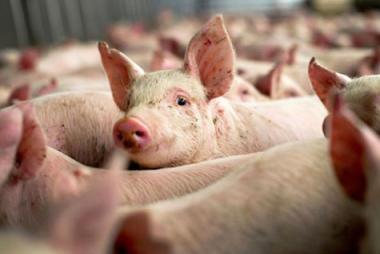
Trước nguy cơ xâm nhiễm của chủng virus FMD SAT-1 từ biên giới, Thứ trưởng Bộ NN - MT Phùng Đức Tiến yêu cầu kích hoạt hệ thống phòng thủ "từ sớm, từ xa" để bảo vệ sinh kế của người dân và an ninh thực phẩm quốc gia.
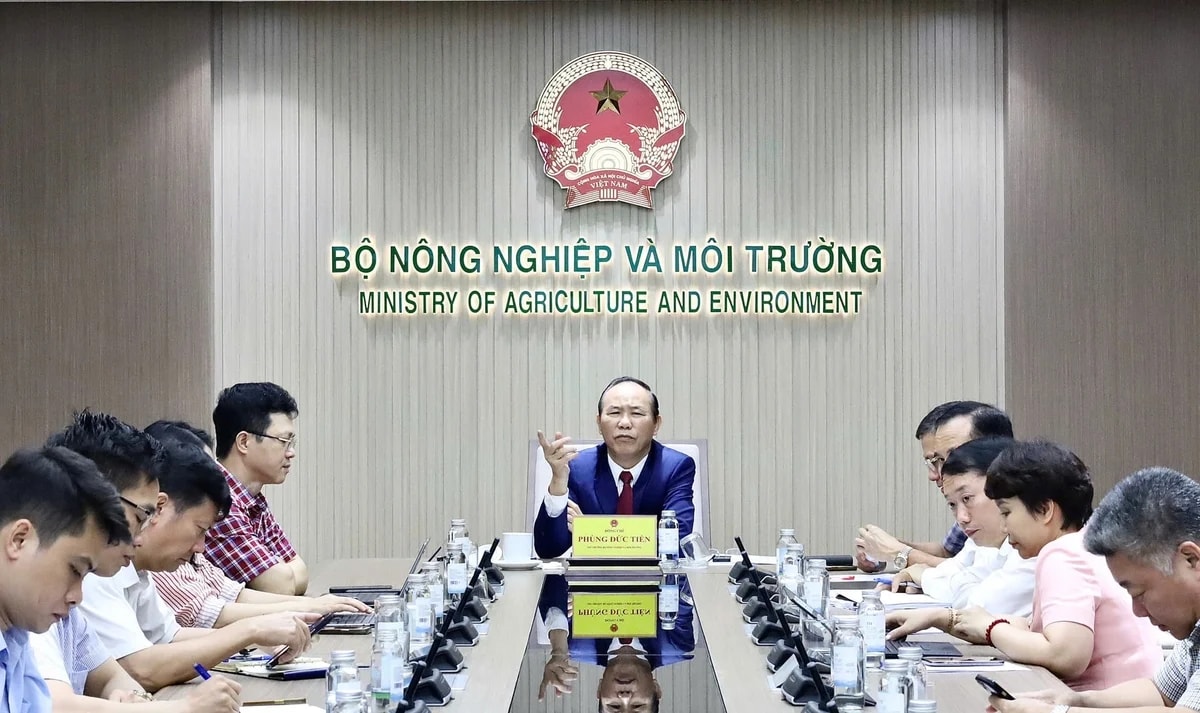
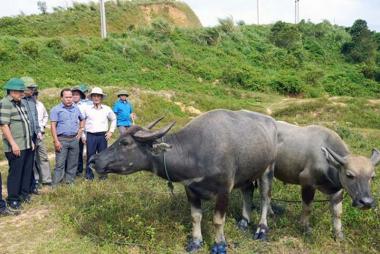
Thứ trưởng Bộ NN-MT Phùng Đức Tiến chủ trì cuộc họp khẩn sáng nay để đối phó dịch bệnh. Nguồn nongnghiepmoitruong.vn
Khác với các tuýp virus O, A hay Asia-1 đã quen thuộc tại Việt Nam, chủng SAT-1 (South African Territories 1) được ví như một "sát thủ mới" với độc lực cực mạnh. Đặc tính nguy hiểm nhất của chủng này là gây viêm cơ tim cấp tính và phá hủy hệ hô hấp.
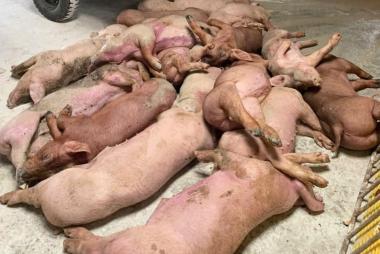
Theo báo cáo của Cục Thú y, tỷ lệ tử vong trên thực địa là con số biết nói. Đối với heo, là động vật dễ bị tổn thương nhất. Nếu bị nhiễm bệnh, heo con có tỷ lệ chết lên đến 50 - 80% chỉ sau thời gian ngắn phát bệnh; heo thịt tỷ lệ chết khoảng 20%.
Còn đối với trâu, bò, dù có sức đề kháng tốt hơn nhưng tỷ lệ chết vẫn dao động từ 10 - 50% tùy tình trạng sức khỏe.
.webp)
Nếu bị lây nhiễm, thì heo là vật nuôi dễ bị thiệt hại lớn nhất từ vi rút SAT - 1. Nguồn: vov.vn
Dấu hiệu nhận biết nhiễm bệnh, ngoài các triệu chứng điển hình như sốt cao, loét miệng, móng và chảy nước bọt, gia súc nhiễm SAT-1 thường có biểu hiện khó thở nặng, bỏ ăn hoàn toàn và có thể chết đột ngột do suy tim trước khi các vết loét kịp lan rộng.
Tại cuộc họp sáng 14/4 do Bộ NN-MT tổ chức, đánh giá của cơ quan chuyên môn cho biết, dù dịch bệnh chưa vào nước ta, nhưng một vấn đề nan giải được đặt ra: Việt Nam hiện chưa có kháng thể sẵn có cho chủng SAT-1 trong đàn vật nuôi. Các loại vaccine đa giá hiện hành không có tác dụng bảo hộ đối với biến chủng này.
Thách thức càng lớn khi việc nhập khẩu vaccine đơn giá chủng SAT-1 từ các tập đoàn đa quốc gia có thể mất tới 6 tháng, với mức giá dự kiến khoảng 40.000 VNĐ/liều. Đây là mức giá khá cao đối với hộ chăn nuôi nhỏ lẻ, đặt ra bài toán về việc nhà nước cần có cơ chế hỗ trợ giá hoặc dự phòng khẩn cấp, để kịp thời bao phủ miễn dịch cho các vùng trọng điểm.
Trong bối cảnh vaccine chưa thể có ngay, Thứ trưởng Phùng Đức Tiến nhấn mạnh: "Vũ khí mạnh nhất hiện nay là kiểm soát biên giới và an toàn sinh học tại chuồng trại".
Theo đó, Bộ NN - MT đưa ra khuyến cáo khẩn cấp, là kiểm soát tuyệt đối nguồn gốc. Không mua bán, vận chuyển gia súc không rõ nguồn gốc, đặc biệt là tại các tỉnh biên giới phía Bắc và miền Trung.
Virus FMD rất nhạy cảm với môi trường axit và kiềm. Người dân cần tăng cường phun khử khuẩn bằng vôi bột hoặc các dung dịch sát trùng chuyên dụng (như Iodine, NaOH 2%) với tần suất cao hơn tại các cửa ngõ trang trại.
Khi phát hiện gia súc có biểu hiện sốt, lờ mờ, loét móng, chủ hộ phải báo ngay cho cơ quan thú y địa phương. Tuyệt đối không bán chạy hoặc vứt xác gia súc ra môi trường.
Để ứng phó, Bộ đã giao Cục Thú y xây dựng kế hoạch 4 giai đoạn:
Giai đoạn 1: Giám sát chủ động tại cửa khẩu, đường mòn và nhập khẩu mẫu mồi xét nghiệm.
Giai đoạn 2: Nhập khẩu dự phòng vaccine và xây dựng bản đồ vùng nguy cơ cao.
Giai đoạn 3: Kích hoạt hệ thống phản ứng nhanh, bao vây ổ dịch ngay từ khi phát hiện ca đầu tiên.
Giai đoạn 4: Nghiên cứu sản xuất vaccine nội địa nhằm làm chủ công nghệ về lâu dài.
Dù virus FMD chủng SAT-1 không lây sang người, nhưng sức tàn phá về kinh tế là vô cùng lớn. Sự phối hợp chặt chẽ giữa các bộ ngành (Công an, Biên phòng) và ý thức tự bảo vệ của người nông dân là chìa khóa duy nhất để ngăn chặn một cuộc khủng hoảng mới trong ngành chăn nuôi.
Tấn Nguyễn - Tạp chí điện tử Nông Thôn Việt
Sau sáp nhập, tỉnh Đồng Nai tiếp tục giữ vị trí là “thủ phủ” chăn nuôi của cả nước. Năm 2025, tỉnh Đồng Nai cung cấp ra thị trường gần 1,16 triệu tấn thịt các loại, tăng hơn 5,4% so với cùng kỳ năm ngoái.
Tuy nhiên, do phát triển mạnh đàn vật nuôi nên các địa phương trên địa bàn tỉnh cũng đối mặt với thách thức lớn trong công tác phòng, chống dịch bệnh trên đàn vật nuôi. Các địa phương càng chú trọng đến công tác phòng, chống dịch, đảm bảo phát triển chăn nuôi bền vững.
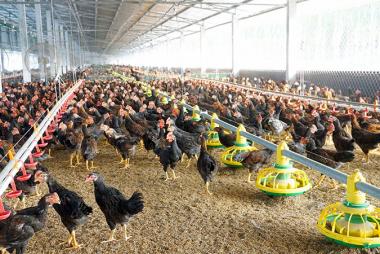
Thời gian qua, tỉnh Đồng Nai phát triển mạnh chăn nuôi công nghiệp với quy mô hàng hóa lớn. Các trang trại chăn nuôi chú trọng áp dụng đồng bộ các giải pháp an toàn sinh học trong chăn nuôi, góp phần phòng, chống dịch, bệnh hiệu quả cho đàn vật nuôi. Đến nay, toàn tỉnh có khoảng 3,94 triệu con heo, chăn nuôi trang trại chiếm khoảng 90% tổng đàn. Tổng đàn gà khoảng 32,6 triệu con, chăn nuôi trang trại chiếm khoảng 89% tổng đàn.
Tuy chăn nuôi nhỏ lẻ chỉ chiếm 10% trên tổng đàn với chăn nuôi heo nhưng trên địa bàn vẫn còn khoảng 12,5 ngàn hộ chăn nuôi nhỏ lẻ và gần 26,5 ngàn hộ chăn nuôi gà. Do chăn nuôi nhỏ lẻ vẫn thu hút đông nông hộ tham gia, tiềm ẩn rủi ro dịch bệnh cao do thiếu vệ sinh thú ý, vẫn còn tình trạng chăn nuôi trong khu dân cư nên chưa thực hiện tốt các giải pháp chăn nuôi an toàn sinh học.
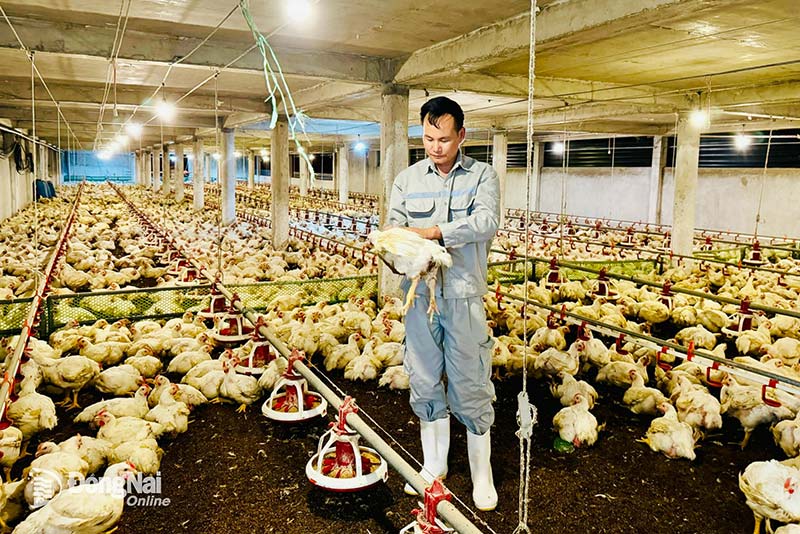
Trang trại chăn nuôi gà công nghiệp tại xã Xuân Đông thực hiện tốt các giải pháp chăn nuôi an toàn sinh học. Ảnh: Bình Nguyên
Chăn nuôi nông hộ dễ xuất hiện dịch bệnh. Năm 2025, toàn tỉnh có 37 xã với 178 cơ sở chăn nuôi xuất hiện dịch tả heo châu Phi, tiêu hủy hơn 7,4 ngàn con heo, tăng hơn 135,5% so với năm 2024. Ngoài ra, nhiều địa phương cũng xuất hiện các dịch bệnh khác trên vật nuôi như: viêm da nổi cục, cúm gia cầm…
Ông Lê Hồng Phong, Giám đốc Trung tâm Kiểm tra vệ sinh thú y Trung ương II nhận xét: Trong quý I-2026, tình hình dịch bệnh vẫn diễn biến phức tạp, nhất là các bệnh cúm gia cầm, dịch tả heo châu Phi với nhiều biến chủng. Dịch bệnh xuất hiện nhiều ở các hộ chăn nuôi nhỏ lẻ. Đồng Nai là “thủ phủ” chăn nuôi với tỷ trọng chăn nuôi lớn nhất nước, tập trung trại giống rất nhiều. Chăn nuôi đóng vai trò quan trọng trong phát triển kinh tế địa phương. Tỉnh cần triển khai hiệu quả các giải pháp chăn nuôi an toàn sinh học, hạn chế dịch bệnh ảnh hưởng đến ngành chăn nuôi.
Ông Nguyễn Hữu Chiến, Phó Chủ tịch UBND xã Xuân Đông cho biết: Địa phương phát triển mạnh chăn nuôi, trong đó tập trung nhiều trang trại quy mô lớn. Ngày 23-3, trên địa bàn xã có một trại heo thông báo xuất hiện tình hình heo chết. Kết quả trại này có heo nhiễm dịch tả châu Phi. Nguyên nhân do trang trại này nhập heo con bên ngoài về nuôi và nguồn nhiễm bệnh từ heo con mới nhập về. Đến nay, tình trạng dịch bệnh được khống chế. Công tác tiêu trùng, khử độc được thực hiện tốt. Khó khăn của địa phương là tập trung đông các cơ sở chăn nuôi nhưng hiện chỉ có một cán bộ thú y, thiếu về nhân lực, nhất là khi xảy ra dịch bệnh cần lực lượng phản ứng nhanh trong xử lý dịch bệnh.
Ông Nguyễn Trường Giang, Chi cục trưởng Chi cục Chăn nuôi và Thú y tỉnh Đồng Nai cho biết: Thời gian qua, công tác triển khai phòng, chống dịch bệnh tại các xã, phường trên địa bàn tỉnh được thực hiện tốt. Công tác phòng, chống dịch yêu cầu phải nhanh, gọn, có thông tin dịch bệnh là phải xử lý ngay. Chi cục Chăn nuôi và Thú y tỉnh luôn phối hợp tốt với các địa phương trong công tác phòng, chống dịch bệnh. Khi có địa phương xuất hiện ổ dịch và báo lên, trong vòng 24 giờ, đơn vị đều kịp thời xuống ổ dịch phối hợp cùng địa phương xử lý.
Chủ động phòng, chống dịch hiệu quả, ngay từ đầu năm, các địa phương chủ động xây dựng kế hoạch, bố trí kinh phí cho công tác phòng, chống dịch trên gia súc, gia cầm, thủy sản năm 2026.
Tại Hội nghị Phòng, chống dịch bệnh trên vật nuôi năm 2026, đại diện phường Bình Phước cho hay: Đến nay, UBND phường Bình Phước luôn xác định công tác phòng, chống dịch bệnh là nhiệm vụ trọng tâm, thường xuyên để bảo vệ sức khỏe nhân dân, góp phần phát triển kinh tế địa phương. Đặc biệt, dịch tả heo châu Phi xuất hiện trên địa bàn và vẫn tiềm ẩn nguy cơ tái phát. Địa phương tập trung triển khai đồng loạt các giải pháp phòng, chống dịch bệnh, không để dịch bệnh lây lan. Công tác giám sát dịch bệnh tại các địa bàn có cơ sở chăn nuôi được chú trọng. Trong năm 2026, UBND phường Bình Phước tiếp tục tập trung thực hiện các kế hoạch tỉnh giao; chú trọng công tác tuyên truyền về phòng, chống dịch bệnh, chăn nuôi an toàn; nâng cao tỷ lệ tiêm phòng, giám sát chăn nuôi nông hộ.
Ông Nguyễn Trí Công, Chủ tịch Hiệp hội Chăn nuôi tỉnh Đồng Nai chia sẻ: Tình hình dịch bệnh trên heo, gà, trâu bò vẫn diễn biến phức tạp. Việc tổ chức chôn lấp động vật bị dịch bệnh tại chỗ nơi trang trại xảy ra ổ dịch bệnh có rủi ro ô nhiễm nguồn nước ngầm, nguồn dịch bệnh tồn tại lâu. Các địa phương nên có giải pháp xử lý heo, gà bệnh phù hợp hơn, nhất là những trang trại chăn nuôi quy mô lớn để hạn chế dịch bệnh lây lan. Tình hình dịch tả heo châu Phi vẫn diễn biến phức tạp, nhất là với các trang trại nhỏ lẻ do hiệu quả vaccine dịch tả heo châu Phi chưa cao. Tỉnh Đồng Nai thực hiện tốt công tác kiểm soát, giám sát dịch bệnh. Tuy nhiên, tỉnh cần quan tâm, kiểm soát chặt chẽ hơn về hoạt động giết mổ, nhất là xử lý tình hình giết mổ lậu hiệu quả sẽ góp phần rất lớn trong kiểm soát dịch bệnh.
Nguồn: Báo Đồng Nai
Phó Chủ tịch Thường trực UBND tỉnh Lê Trọng Yên vừa có văn bản chỉ đạo các sở, ban, ngành liên quan và các địa phương trong tỉnh tiếp tục thực hiện đồng bộ các giải pháp phòng, chống bệnh dịch tả lợn châu Phi (DTLCP) trên địa bàn tỉnh.
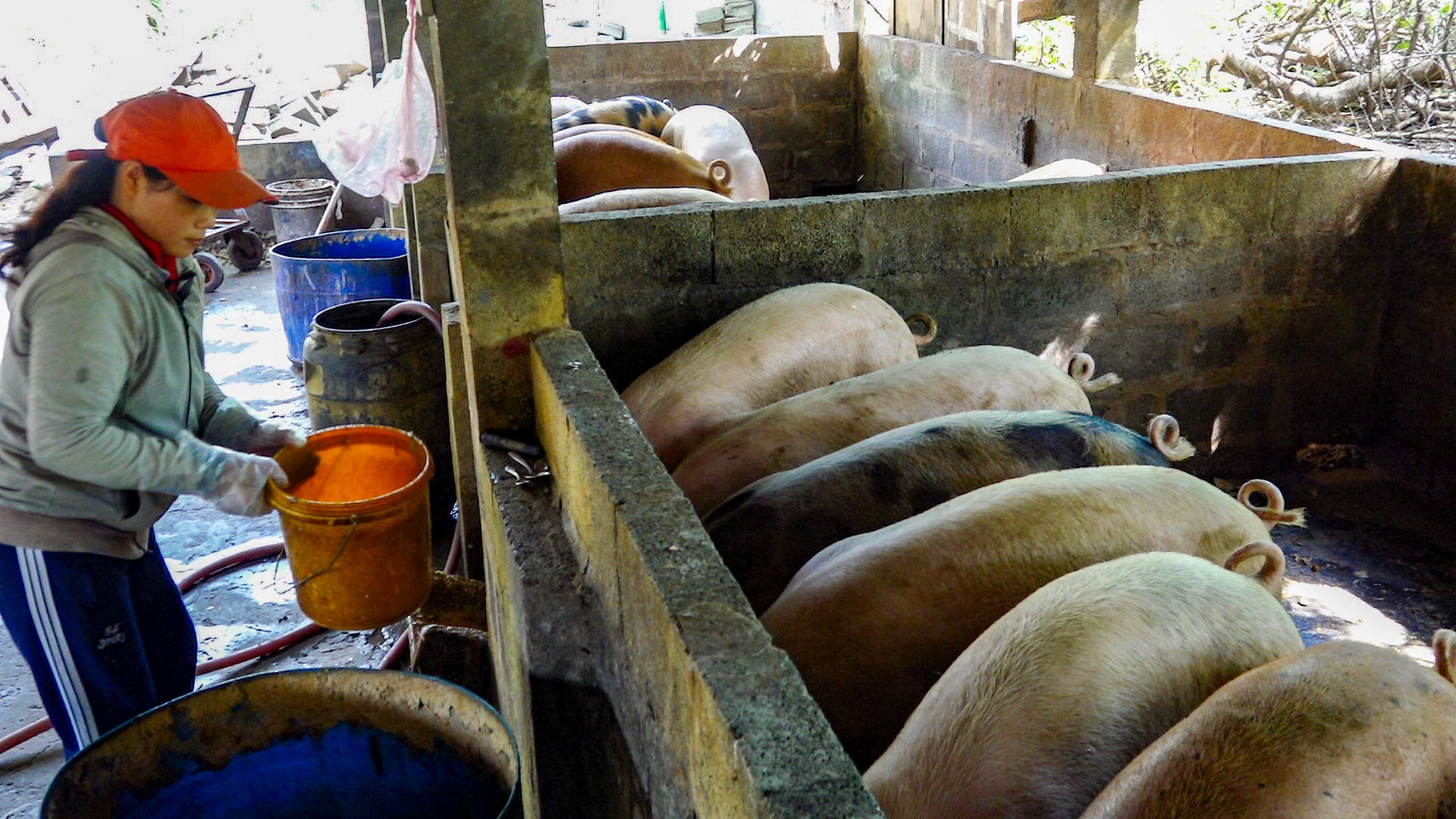
Người chăn nuôi chú trọng vệ sinh, phòng, chống dịch bệnh.
Theo đó, để chủ động phòng, chống, kiểm soát dịch bệnh DTLCP kịp thời, hiệu quả, UBND tỉnh yêu cầu các sở, ban, ngành liên quan và Chủ tịch UBND các xã, phường, đặc khu Phú Quý tuyệt đối không chủ quan, lơ là trong công tác phòng, chống dịch bệnh trên động vật, đặc biệt là bệnh DTLCP.
Cụ thể, UBND tỉnh giao Sở Nông nghiệp và Môi trường chỉ đạo, tổ chức hướng dẫn, đôn đốc, kiểm tra công tác phòng, chống dịch bệnh DTLCP. Song song đó, phối hợp với UBND các xã, phường, đặc khu Phú Quý chủ động giám sát chặt chẽ tình hình dịch bệnh, phát hiện sớm, cảnh báo và chỉ đạo xử lý triệt để ổ dịch, không để dịch bệnh lây lan trên diện rộng…
Các sở, ngành liên quan chỉ đạo tăng cường kiểm soát lưu thông. Qua đó, phát hiện, kịp thời ngăn chặn, xử lý nghiêm các trường hợp buôn bán, vận chuyển lợn và các sản phẩm từ lợn mắc bệnh, không rõ nguồn gốc, xuất xứ, chưa qua kiểm dịch trên thị trường ra, vào địa bàn tỉnh. Bên cạnh đó, chủ động, tích cực chia sẻ thông tin, dữ liệu với cơ quan thú y các cấp; phối hợp tổ chức chỉ đạo triển khai các biện pháp phòng, chống dịch bệnh theo quy định của pháp luật.
Song song đó, việc tuyên truyền về các biện pháp phòng, chống dịch bệnh DTLCP; thông tin kịp thời, chính xác về diễn biến dịch bệnh để người dân không hoang mang, chủ động áp dụng các biện pháp phòng bệnh theo hướng dẫn của cơ quan chuyên môn; kịp thời phản bác các thông tin sai lệch, gây hoang mang, lo lắng trong Nhân dân… cần được đẩy mạnh.
UBND các xã, phường, đặc khu Phú Quý cần tập trung huy động các nguồn lực trên địa bàn tổ chức triển khai, thực hiện quyết liệt, đồng bộ, hiệu quả các giải pháp phòng, chống bệnh DTLCP; kịp thời phát hiện, ngăn chặn và kiên quyết xử lý nghiêm các trường hợp mua bán, vận chuyển, giết mổ lợn bệnh, vứt xác lợn chết làm lây lan dịch bệnh, ô nhiễm môi trường, gây ảnh hưởng cho người dân và cộng đồng.
Nguồn: Báo Lâm Đồng